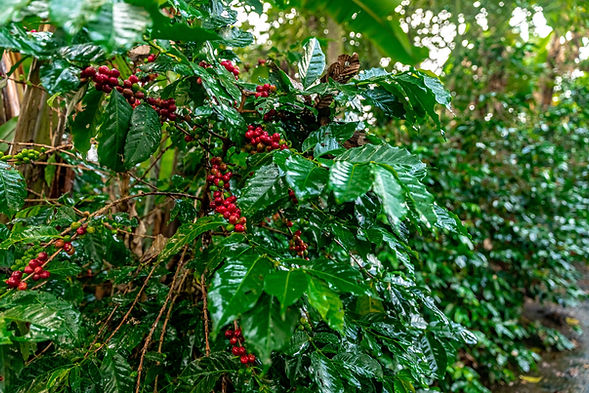
Robusta, botanically known as Coffea canephora, is the second most important coffee variety in the world and forms a central pillar of coffee cultivation, particularly in Africa, Asia, and Brazil. Unlike Arabica , Robusta is genetically far more diverse and naturally more resistant to heat, humidity, and many diseases. This robustness has led to the development of numerous regional landraces and selected lines worldwide, which together account for the wide range of Robusta varieties available today.
Among the most economically important varieties are classic lines such as Conilon, Kouillou, and Nganda, as well as national selections—for example, the BP lines of Uganda or the S-Selections of Sri Lanka. Modern breeding programs have also produced productive hybrids, including Catimor-Canephora lines, HDT hybrids, and Icatu-based research selections from Brazil. These varieties were created to ensure high yields, uniform ripening, and reliable disease resistance.
Robusta varieties are characterized by a strong body, low acidity, and earthy to chocolatey notes. However, in recent years, increasingly specialized Robusta microlots have emerged, exhibiting surprisingly clear, sweet, and aromatically complex profiles through careful fermentation and processing. As a result, Robusta is gaining not only economic importance but also recognition in the specialty coffee sector.
Robusta varieties today stand for stability, adaptability and agronomic performance – and are therefore an indispensable part of global coffee diversity.